

STAINLESS STEEL (LOW MAINTENANCE)
Okeya Fuji Ginsan Petty 150 mm


Quick View
20% off


Okeya Fuji Ginsan Petty 150 mm
- Sale price
- $491.96
- Regular price
- $614.95
Ryusen Hamono Oukoku-Ryu KAI Gyuto 210 mm


Quick View


Ryusen Hamono Oukoku-Ryu KAI Gyuto 210 mm
- Price
- $1,129.95
Ryusen Hamono Oukoku-Ryu KAI Gyuto 240 mm


Quick View


Ryusen Hamono Oukoku-Ryu KAI Gyuto 240 mm
- Price
- $1,499.95
Kenshiro Hatono Ginsan Damascus Kiritsuke Petty 135 mm


Quick View


Kenshiro Hatono Ginsan Damascus Kiritsuke Petty 135 mm
- Price
- $349.95
Matsubara Hamono R2 Damascus Gyuto 210 mm (Rosewood)


Quick View


Matsubara Hamono R2 Damascus Gyuto 210 mm (Rosewood)
- Price
- $624.95
Matsubara Hamono R2 Damascus Gyuto 210 mm


Quick View


Matsubara Hamono R2 Damascus Gyuto 210 mm
- Price
- $624.95
Ryusen Hamono Oukoku-Ryu KAI Sujihiki 260 mm


Quick View


Ryusen Hamono Oukoku-Ryu KAI Sujihiki 260 mm
- Price
- $1,489.95
Ryusen Hamono Oukoku-Ryu KAI Petty 135 mm


Quick View


Ryusen Hamono Oukoku-Ryu KAI Petty 135 mm
- Price
- $699.95
Ryusen Hamono Oukoku-Ryu KAI Bunka 175 mm


Quick View


Ryusen Hamono Oukoku-Ryu KAI Bunka 175 mm
- Price
- $999.95
Ryusen Hamono Oukoku-Ryu KAI Nakiri 155 mm


Quick View


Ryusen Hamono Oukoku-Ryu KAI Nakiri 155 mm
- Price
- $999.95
Yu Kurosaki Shizuku Petty 120 mm + Santoku 165 mm

Quick View
10% off

Yu Kurosaki Shizuku Petty 120 mm + Santoku 165 mm
- Sale price
- $706.41
- Regular price
- $784.90
Yoshimi Kato Minamo 4 piece kit + Free Stand

Quick View
18% off

Yoshimi Kato Minamo 4 piece kit + Free Stand
- Sale price
- $1,535.22
- Regular price
- $1,855.75
Hatsukokoro Ginrei 4 pc kit + Free Stand

Quick View
28% off

Hatsukokoro Ginrei 4 pc kit + Free Stand
- Sale price
- $709.58
- Regular price
- $984.75
Hatsukokoro Hikari 5 pc kit + Free Stand

Quick View
27% off

Hatsukokoro Hikari 5 pc kit + Free Stand
- Sale price
- $777.53
- Regular price
- $1,064.70
Yoshihiro Yauji Petty 150 mm + Bunka 180 mm

Quick View
10% off

Yoshihiro Yauji Petty 150 mm + Bunka 180 mm
- Sale price
- $751.41
- Regular price
- $834.90


STAINLESS STEEL
Stainless steel knives are considered low maintenance, easier than both stainless clad and iron clad to care for.
Stainless steel Japanese knives are made in a process called “Sanmai” or “Forge welding” where two softer layers of stainless steel are laminated around a harder core layer of stainless steel. All three of these layers are rust resistant and therefore are not susceptible to rust or discoloration. The softer outer layers of steel are used to make the knife more durable and flexible while the harder core layer is used to provide better edge retention to the blade.
Japanese stainless steel is special because of the added carbon content, which provides better edge retention than standard stainless steel. That said, they do not have the same edge retention or ease of sharpening as carbon steels. If you want a stainless steel that is more comparable to carbon steel, higher quality stainless super steels such as R2/SG2, HAP40, and Cobalt Special, are best; however, these tend to be more expensive.
HOW TO CARE FOR STAINLESS STEEL KNIVES
Stainless steel is a great place to start if you're just getting into cooking or Japanese knives. As the name implies, these are very difficult to rust or discolour. Pushed to their absolute limits they certainly can still rust, but it takes a lot of mistreatment for that to happen.
Remember to follow the care recommendations for all Japanese Knives:
- Do not put them in the dishwasher or soak them in water, as this may ruin the wooden handle and rust the blade.
- Wash with soapy water and wipe dry after each use, especially after handling acidic ingredients, to minimize the risk of rusting.
- Don’t cut through anything you wouldn’t bite through, like frozen foods, hard candies, or bones, as this may chip or damage the knife.
- Don't torque the blade, as this may chip the knife. Use it in a forward and back, up and down motion without twisting.
- Don’t scrape the cutting board with your knife, as this will cause it to dull quickly and ruin your edge.
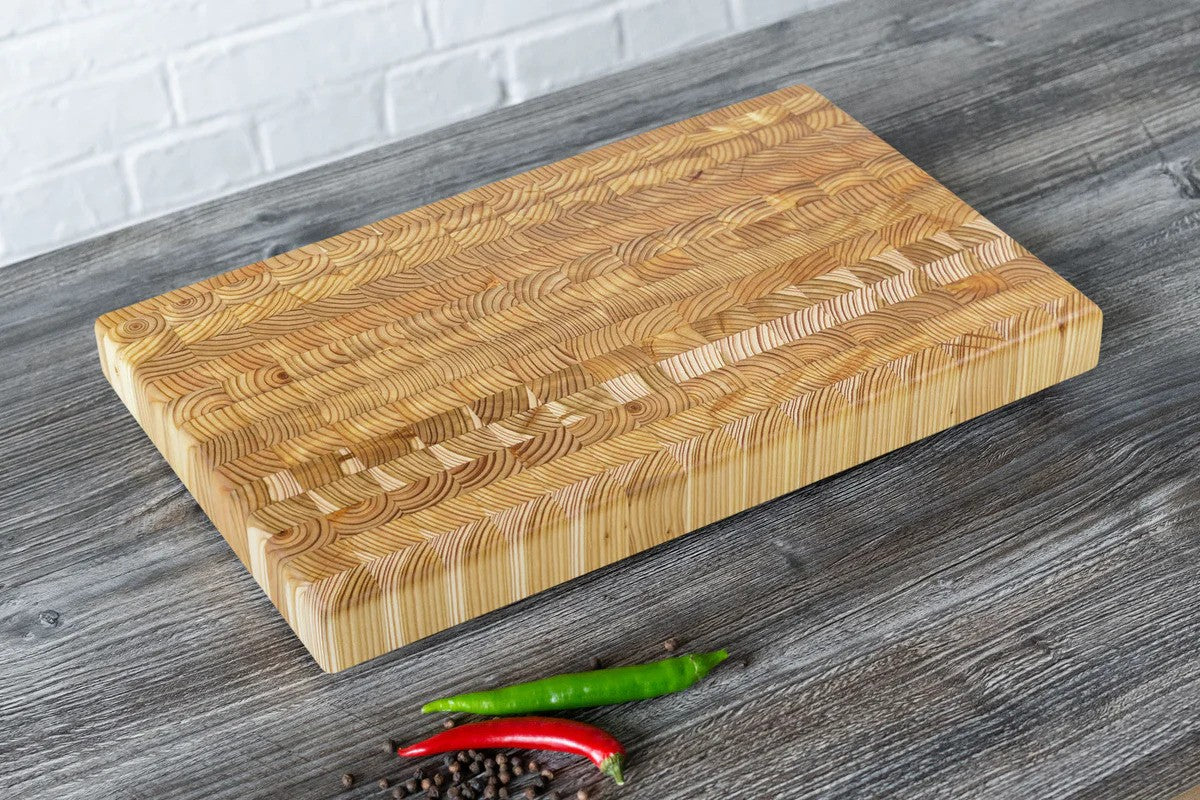
- Use an end grain wooden cutting board or hi-soft rubberized cutting board if you can to protect your edge. Glass, bamboo, and granite are terrible materials for cutting boards, and plastic is only slightly better.
- Choosing a selection results in a full page refresh.