Nakagawa Satoshi B1 Sujihiki 230 mm

Price
$464.95
Taxes and shipping calculated at checkout
Only 4 left in stock!

Pickup available at Etobicoke

Usually ready in 1 hour

Check availability at other stores
SPECIFICATIONS
Blade Length  232mm
Total Length  390 mm
Steel  Aogami (Blue #1)
Handle  Mono Ebony
Ferrule N/A
Rockwell 63-64
Height Spine to heel  33 mm
Width at Spine  2.8 mm
Weight  164 grams
Bevel
Double (50/50)


The Blacksmith

Satoshi Nakagawa is an up and coming blacksmith based out of Sakai City, Osaka Prefecture, Japan. Before launching his own workshop in 2021, Nakagawa-san trained under Kenichi Shiraki, who was a master craftsman, known for his Honyaki knives. Although Nakagawa-san works primarily with Ginsan, and Blue # 1 / 2, he has a wide breadth, given sixteen years of training at Shiraki hamono, he too, possesses the coveted skill of producing Honyaki knives, now under his own name. Nakagawa-san’s blades are characterized by their clearly defined bevels, thinness behind the edge, thin tip, nice balance/weight in hand, and smooth fit/finish (chamfered spine, smooth choil). These knives are quite versatile profile wise, with a nice flat spot, and a gentle curve towards the k-tip, making them great for precise detail work!


The Knife

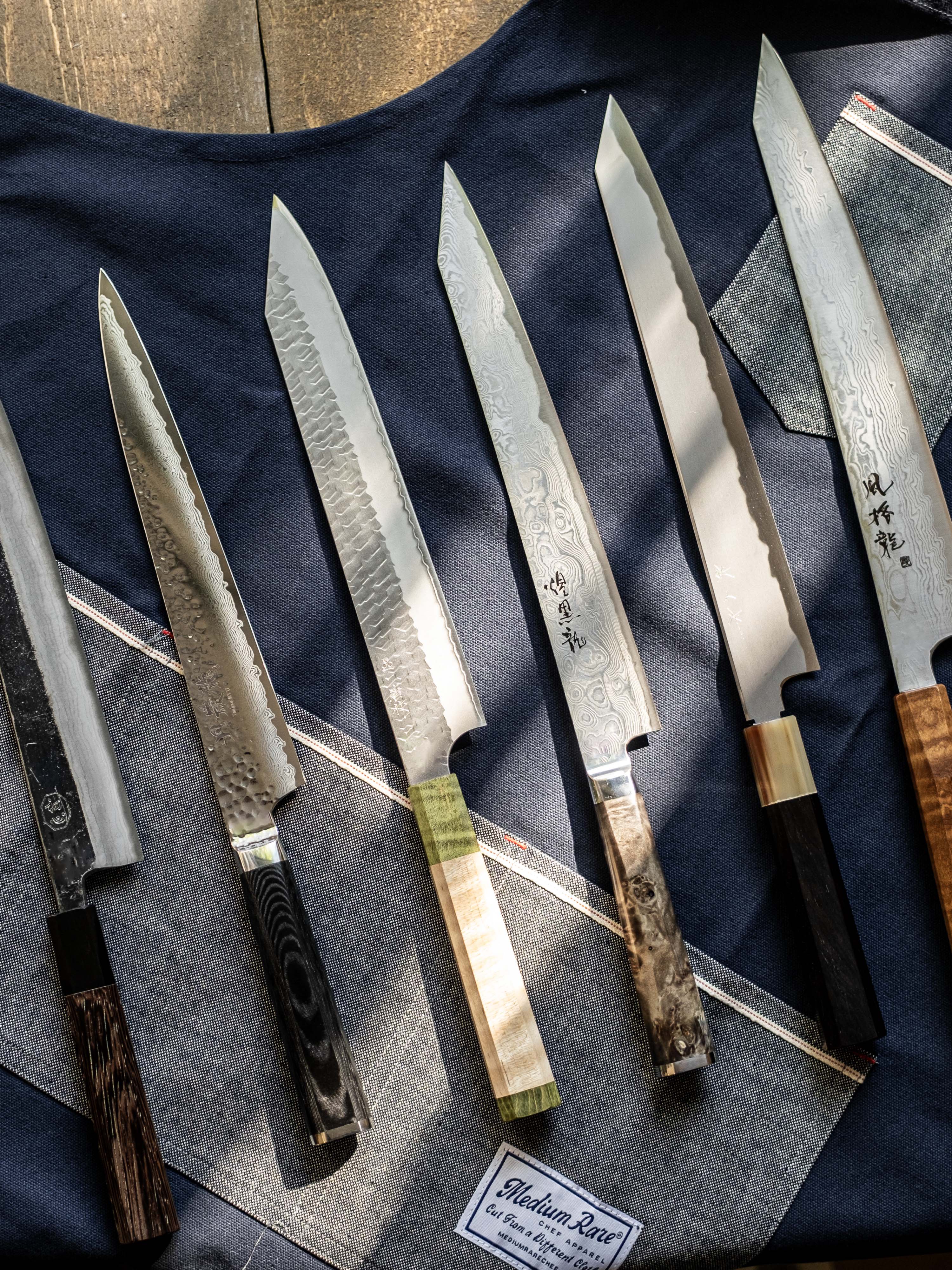
The word "Sujihiki" translates to "flesh slicer". The long, slender blade allows the user to make long drawing strokes, which makes it incredibly adept at slicing and reduces the amount of sawing needed to get through ingredients. They are most commonly in the 240 mm (10 inches) to 300 mm (12 inches) range. The Sujihiki has a very specific use case, so if you're looking for a knife that is capable of slicing and chopping vegetables, we would recommend a Gyuto or Kiritsuke. 


Knife Care (Iron Clad)

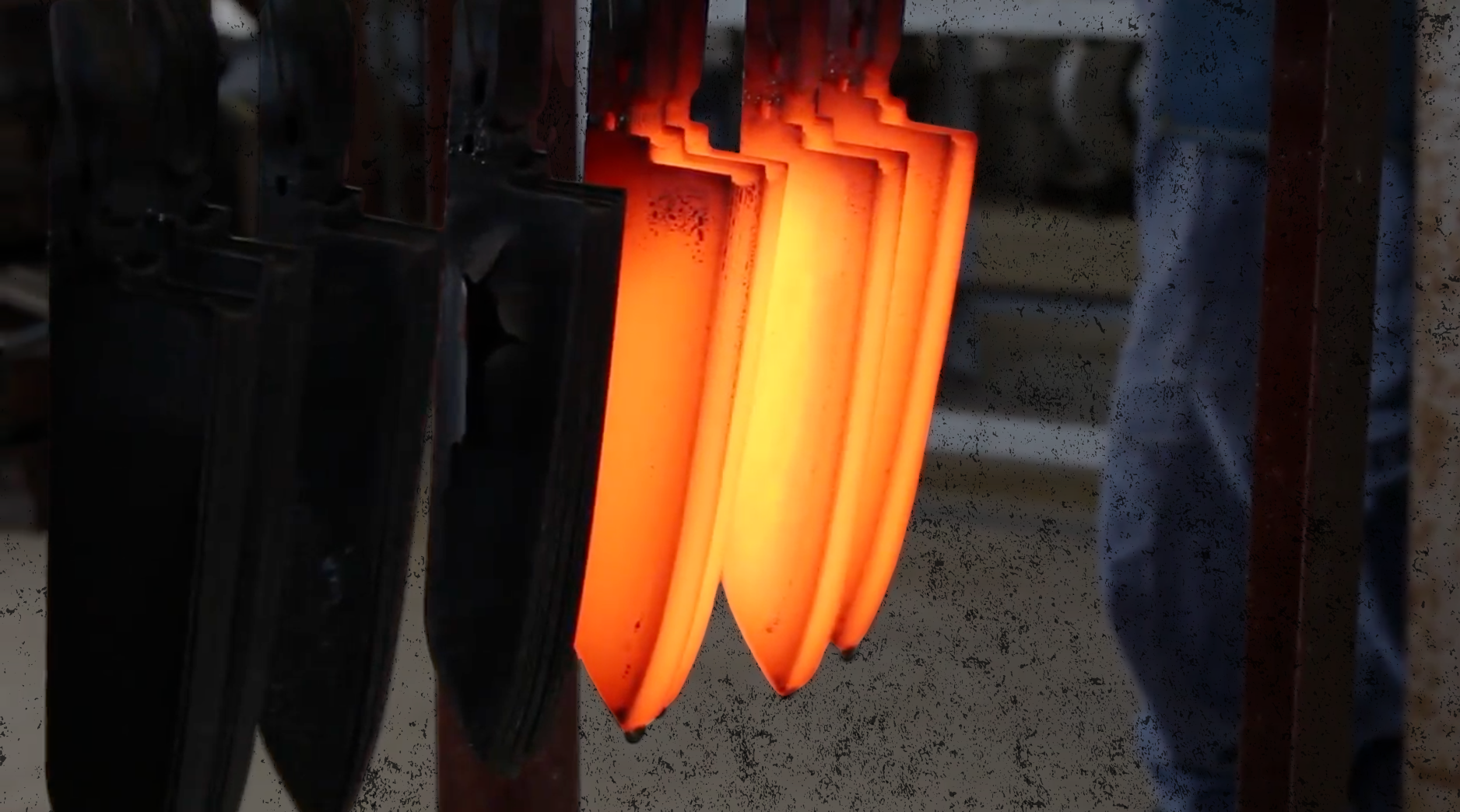
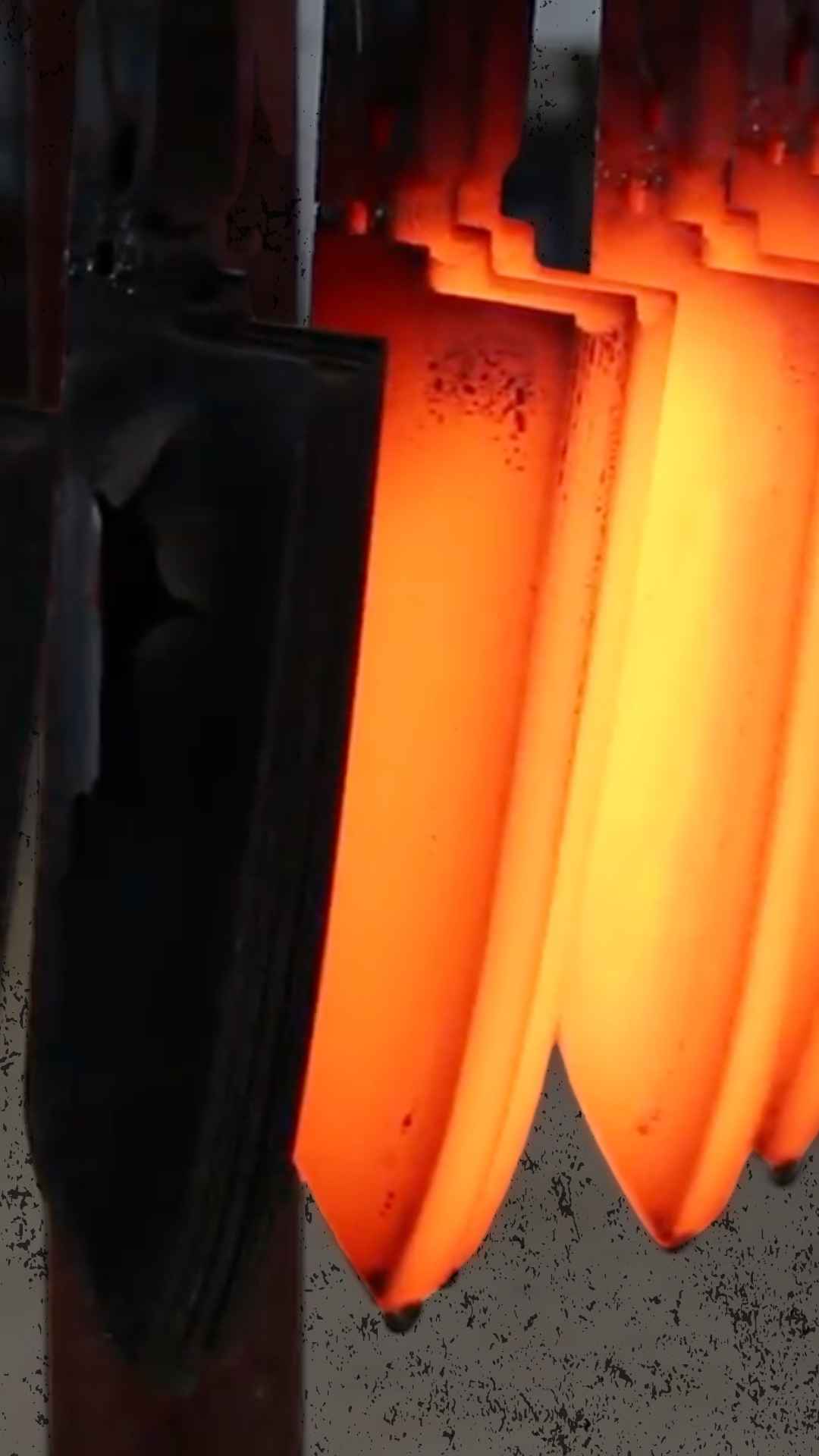
  • This Knife is made from 3 layers of material; A layer of iron on each side protecting a layer of carbon steel at the core, in a process referred to as Sanmai or forge welding. Iron and carbon steel are both susceptible to rust and must be kept dry and clean at all time’s to avoid oxidation and discolouration.
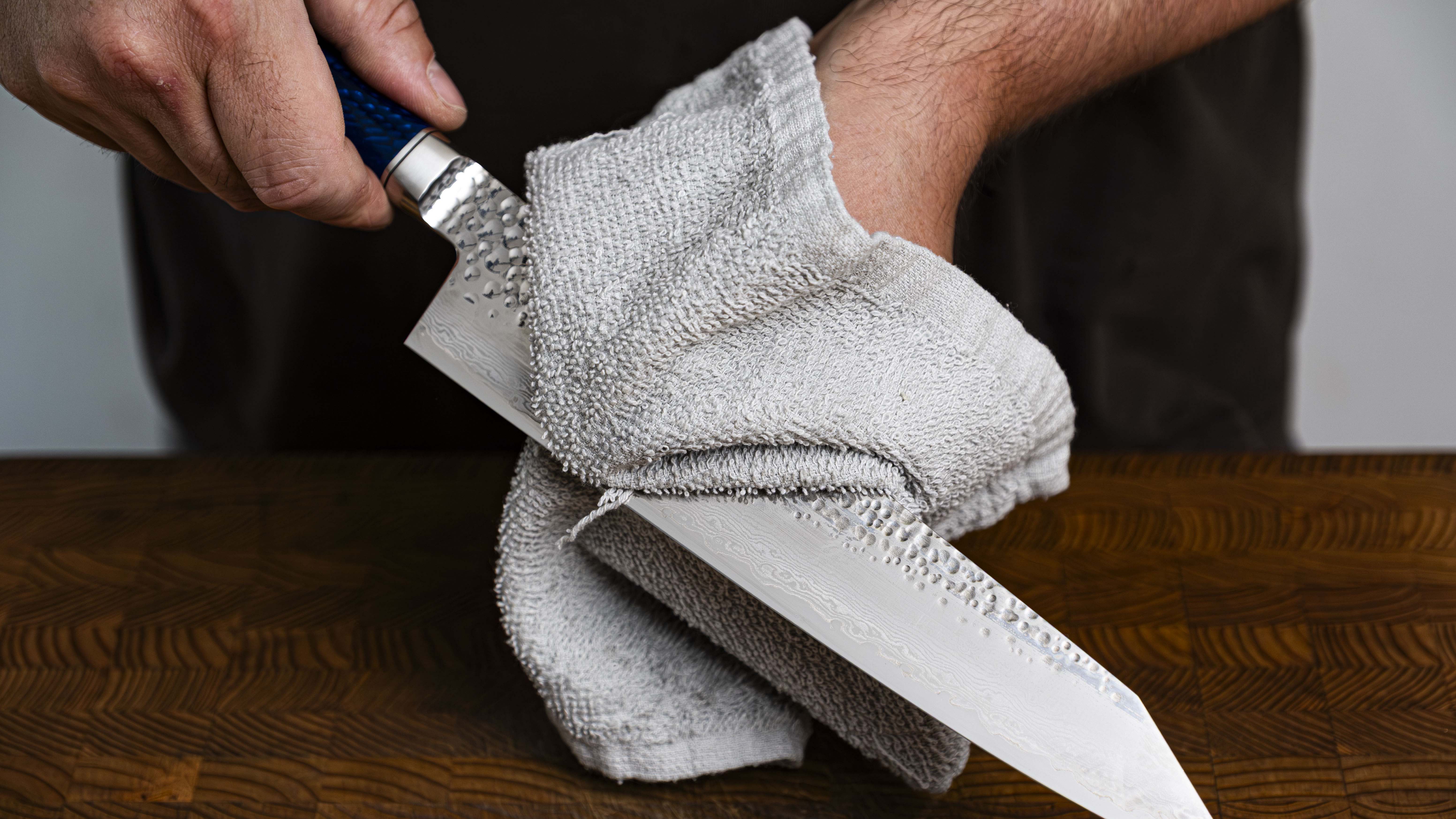
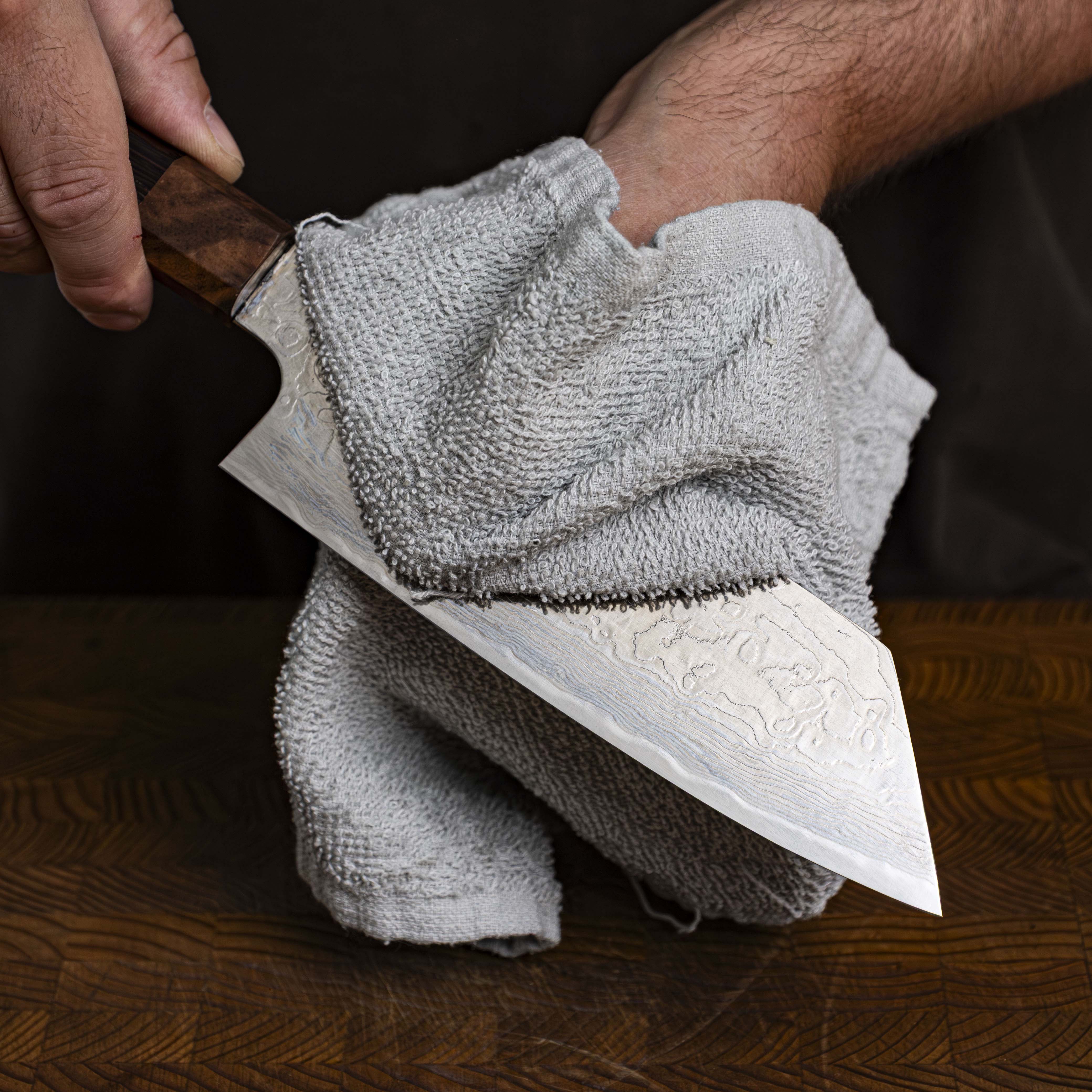
  • Simply wipe the knife with a damp cloth immediately after use.
  • Wash with regular dish soap and warm water using a none abrasive sponge or cloth.
  • Never put your knife in the dishwasher! The extreme heat will ruin the wooden handle.
  • Highly acidic ingredients (Onions, Tomatoes, Citrus) Will cause rust and oxidation to happen faster, thus the user must ensure the knife is wiped clean immediately after working with such an ingredient.
  • Should any rust form it can be removed using a rust eraser or a mixture of Baking soda and water to simply scrub it clean.
  • Avoid Bones, Frozen foods, nuts and hard candies or anything other than fruits, vegetables and proteins.
CARE INSTRUCTIONS

Follow these care recommendations for your Japanese knives to protect the edge and keep them sharp as long as possible: 

  • Do not put them in the dishwasher or soak them in water, as this may ruin the wooden handle and rust the blade. 
  • Wash with soapy water and wipe dry after each use, especially after handling acidic ingredients, to minimize the risk of rusting.  
  • Don’t cut through anything you wouldn’t bite through, like frozen foods, hard candies, or bones, as this may chip or damage the knife. 
  • Don't torque the blade, as this may chip the knife. Use it in a forward and back, up and down motion without twisting.
  • Don’t scrape the cutting board with your knife, as this will cause it to dull quickly and ruin your edge. 
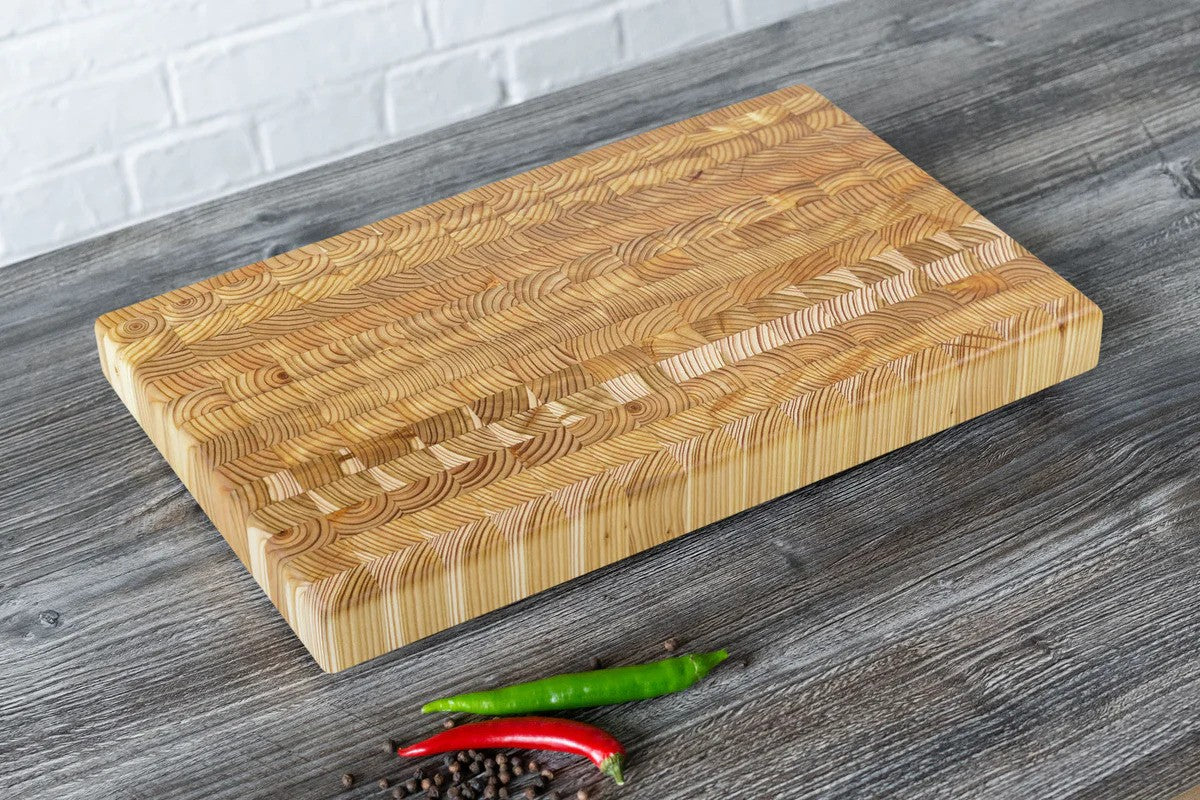
  • Use an end grain wooden cutting board or hi-soft rubberized cutting board if you can to protect your edge. Glass, bamboo, and granite are terrible materials for cutting boards, and plastic is only slightly better. 
SHIPPING & RETURNS

All products are shipped within 24 hours. We offer same day shipping for products ordered by 12pm. Please allow 4-7 business days for your shipment to arrive with standard shipping. Expedited shipping options are also available at checkout.

We offer free shipping on orders within Canada over $150 CAD and free shipping on orders to the US over $200 USD.

Curbside pick-up is available at both our Hamilton and Etobicoke locations.

To make sure our customers are always satisfied, we offer full refunds on products for 14 days after receiving them. See our full return policy for details.

More questions? Check out our shipping policy, our return policy, or reach out to us directly.

KNIFE SHAPE

THE SUJIHIKI

The word "Sujihiki" translates to "flesh slicer". The long, slender blade allows the user to make long drawing strokes, which makes it incredibly adept at slicing and reduces the amount of sawing needed to get through ingredients. They are most commonly in the 240 mm (10 inches) to 300 mm (12 inches) range. The Sujihiki has a very specific use case, so if you're looking for a knife that is capable of slicing and chopping vegetables, we would recommend a Gyuto or Kiritsuke.

STEEL TYPE

AOGAMI #1

AKA Blue #1: This steel type is most commonly used in high grade, single beveled knives. It has elevated levels of carbon and tungsten compared to Aogami #2, which improves its edge retention and toughness compared to the aforementioned steel type.

Chemical Composition:
C 1.25-1.35% | Cr 0.3-0.5% | W 1.5-2.0%

COMPOSITION

IRON CLAD

HIGH MAINTENANCE

Iron clad knives are composed of three layers of material: iron coating the outside with carbon steel inside. All layers are susceptible to rust and discolouration, so they must be kept dry and clean by wiping them down immediately after use. They will develop a patina (a darkening of the steel; blue, dark grey, and sometimes black colouration of the blade) no matter how well they are cared for. Iron clad knives are great for those who plan to thin and polish their blades, as iron is much easier to work with than stainless steel.

THE BLACKSMITH

NAKAGAWA SATOSHI

Satoshi Nakagawa is an up and coming blacksmith based out of Sakai City, Osaka Prefecture, Japan. Before launching his own workshop in 2021, Nakagawa-san trained under Kenichi Shiraki, who was a master craftsman, known for his Honyaki knives. Although Nakagawa-san works primarily with Ginsan, and Blue # 1 / 2, he has a wide breadth, given sixteen years of training at Shiraki hamono, he too, possesses the coveted skill of producing Honyaki knives, now under his own name. Nakagawa-san’s blades are characterized by their clearly defined bevels, thinness behind the edge, thin tip, nice balance/weight in hand, and smooth fit/finish (chamfered spine, smooth choil). These knives are quite versatile profile wise, with a nice flat spot, and a gentle curve towards the k-tip, making them great for precise detail work!

RECENTLY VIEWED

RECOMMENDED FOR YOU

REVIEWS