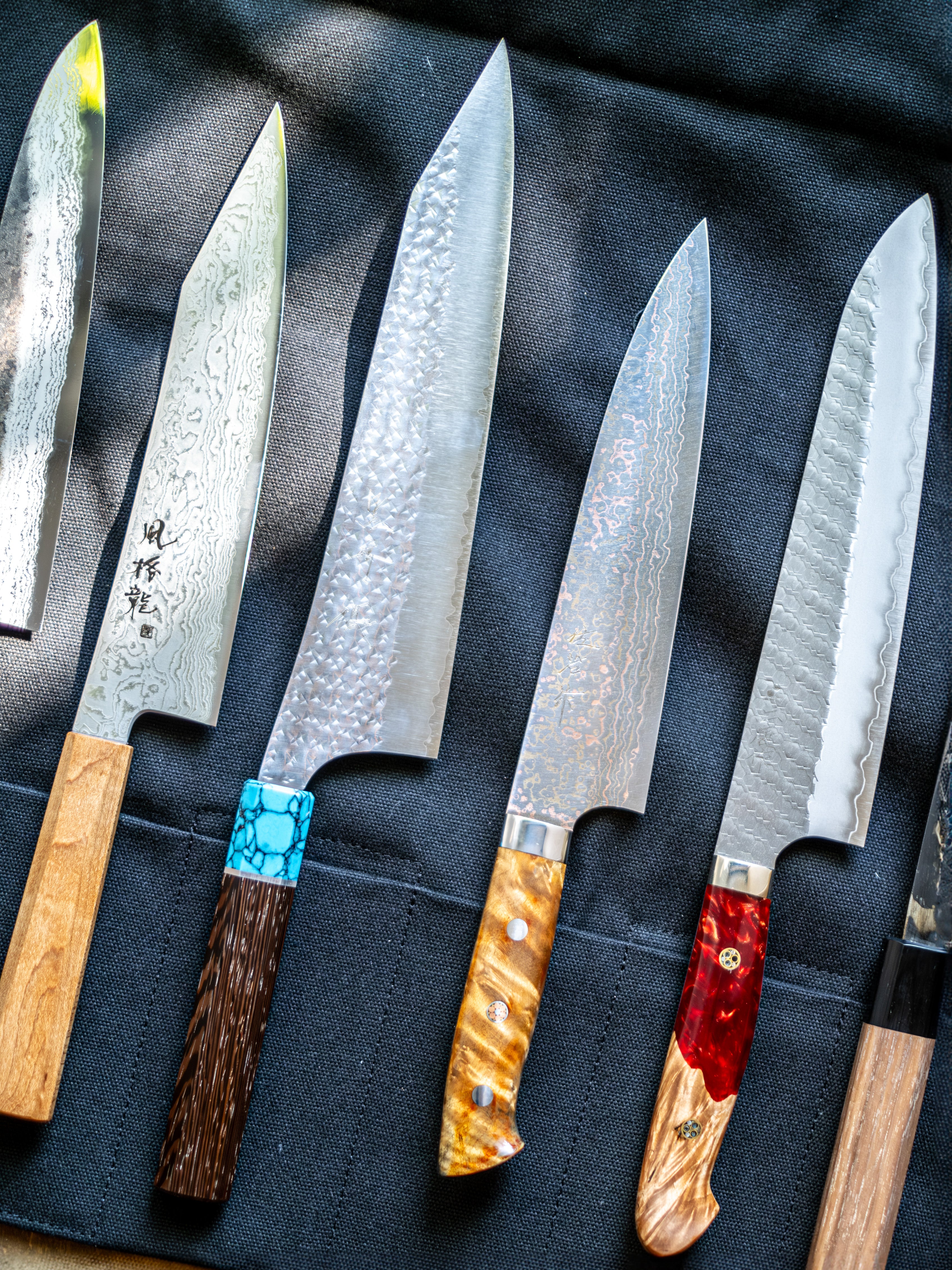
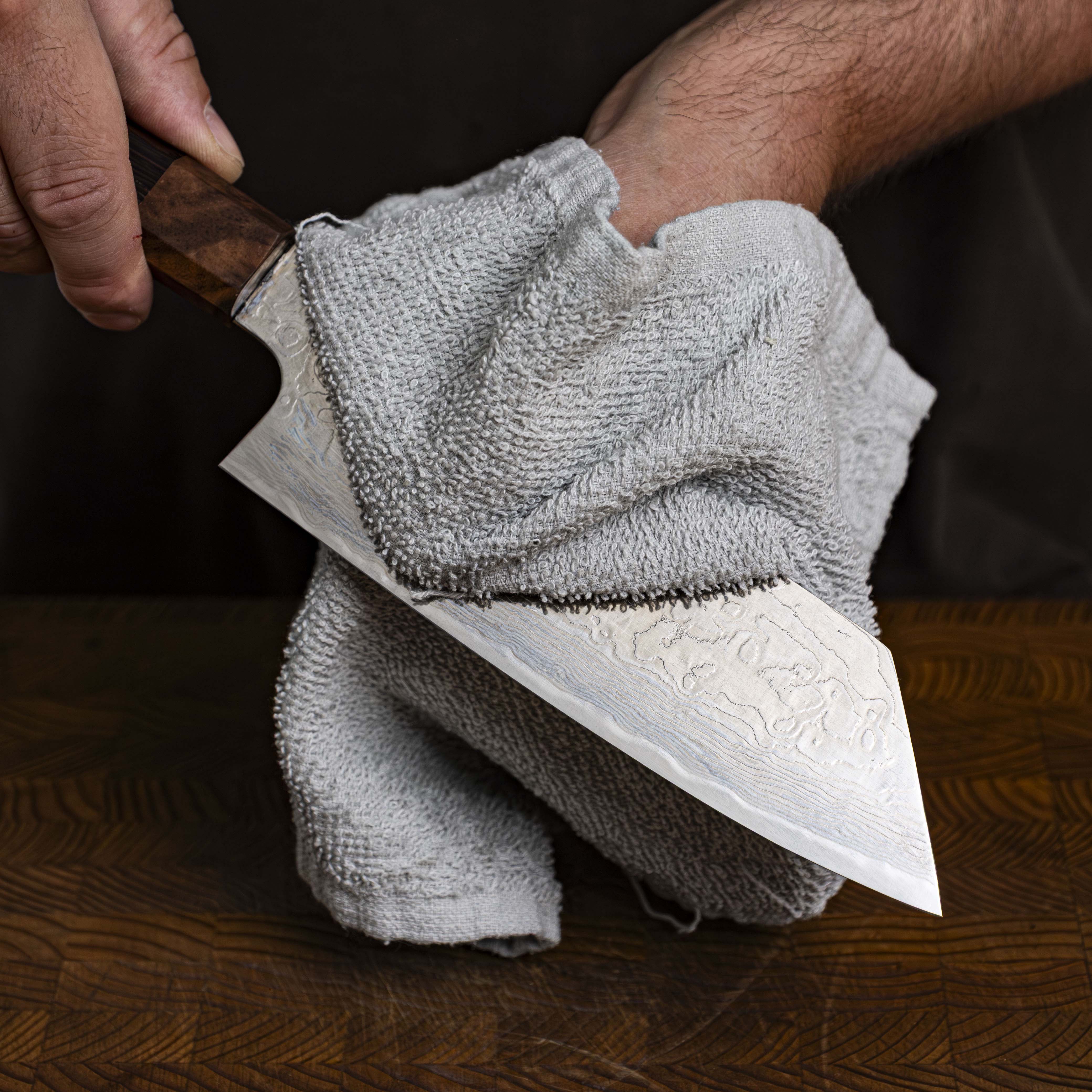
Okeya Fuji Ginsan Gyuto 210 mm

Price
$659.95
Taxes and shipping calculated at checkout
Only 5 left in stock!

Pickup available at Etobicoke

Usually ready in 1 hour

Check availability at other stores
SPECIFICATIONS
Length  210 mm
Total Length 355 mm
Steel Ginsan
Handle
Ferrule N/A
Rockwell 61-62 HRC
Height Spine to heel 43 mm
Width at Spine 2.0 mm
Weight 140 grams
Bevel  Double (50/50)


The Blacksmith

OKEYA HAMONO


Okeya Hamono is located in Miki City where the grandfather of current owner Akihoto Fujiwara began production of what are known as “Kogatana” knives. These are small, multipurpose knives that look like a mini katana and were generally used for crafts, whittling and cutting paper. Nowadays, Fujiwara-san and his son focus their attention on double beveled blades.

The Knife

THE GYUTO

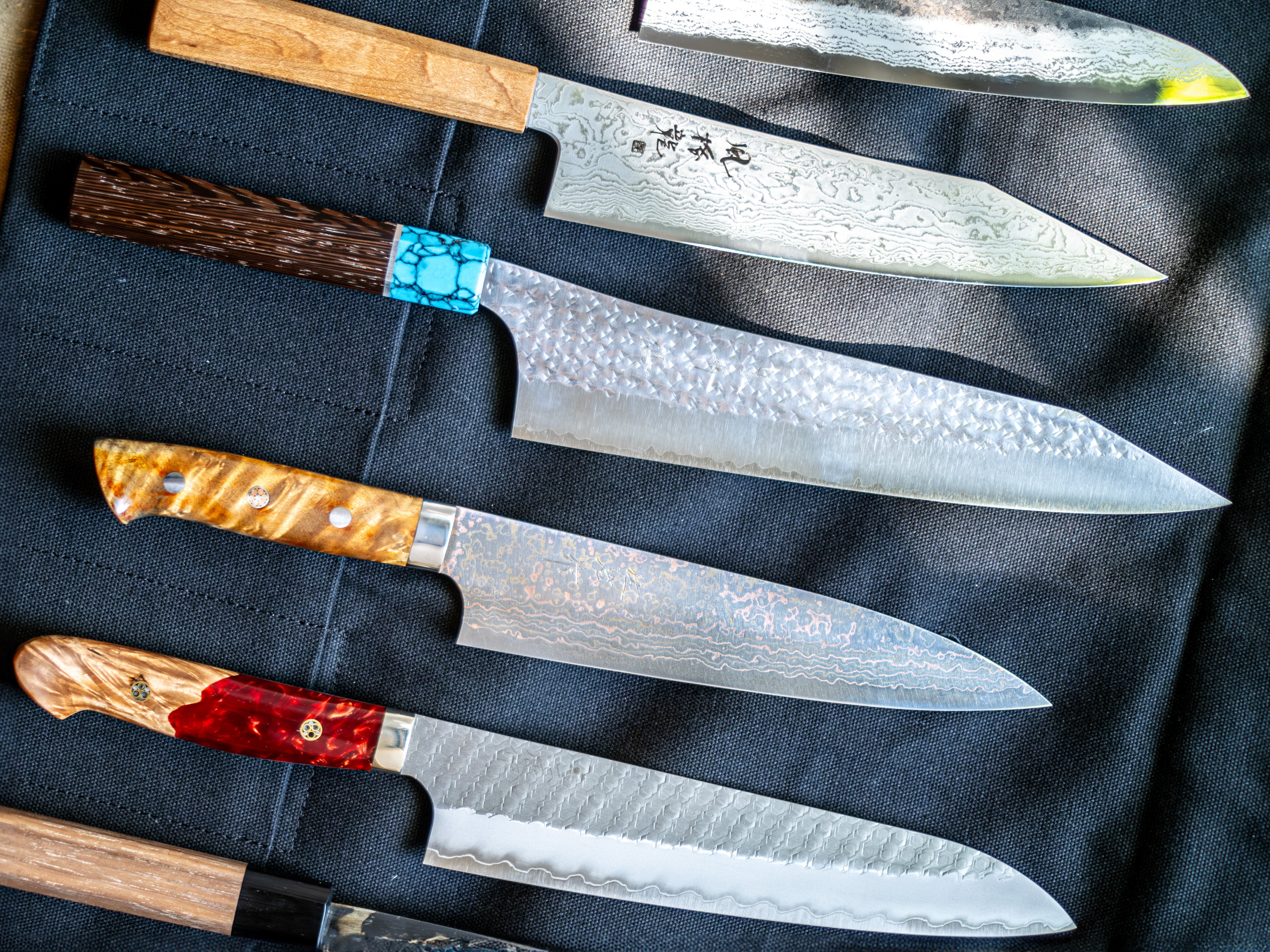
The Gyuto is the Japanese equivalent to the western style chef’s knife and is without question the most versatile knife shape. It ranges in size from 180 mm (7 inches) to 240 mm (10 inches), making it longer than the Santoku and Bunka. This length makes it adept at handling almost any task you'll come across in the kitchen, from mincing small ingredients to chopping through larger fruits and vegetables. The longer the knife, the more time it will take to grow accustomed to its length, but the more versatile it will be.


Knife Care (Stainless Steel)

  • Although this knife is made from stainless steel we do still encourage our customers to keep their knives as dry and clean as possible.
  • NO DISHWASHER - the high heat will ruin the wooden handle.
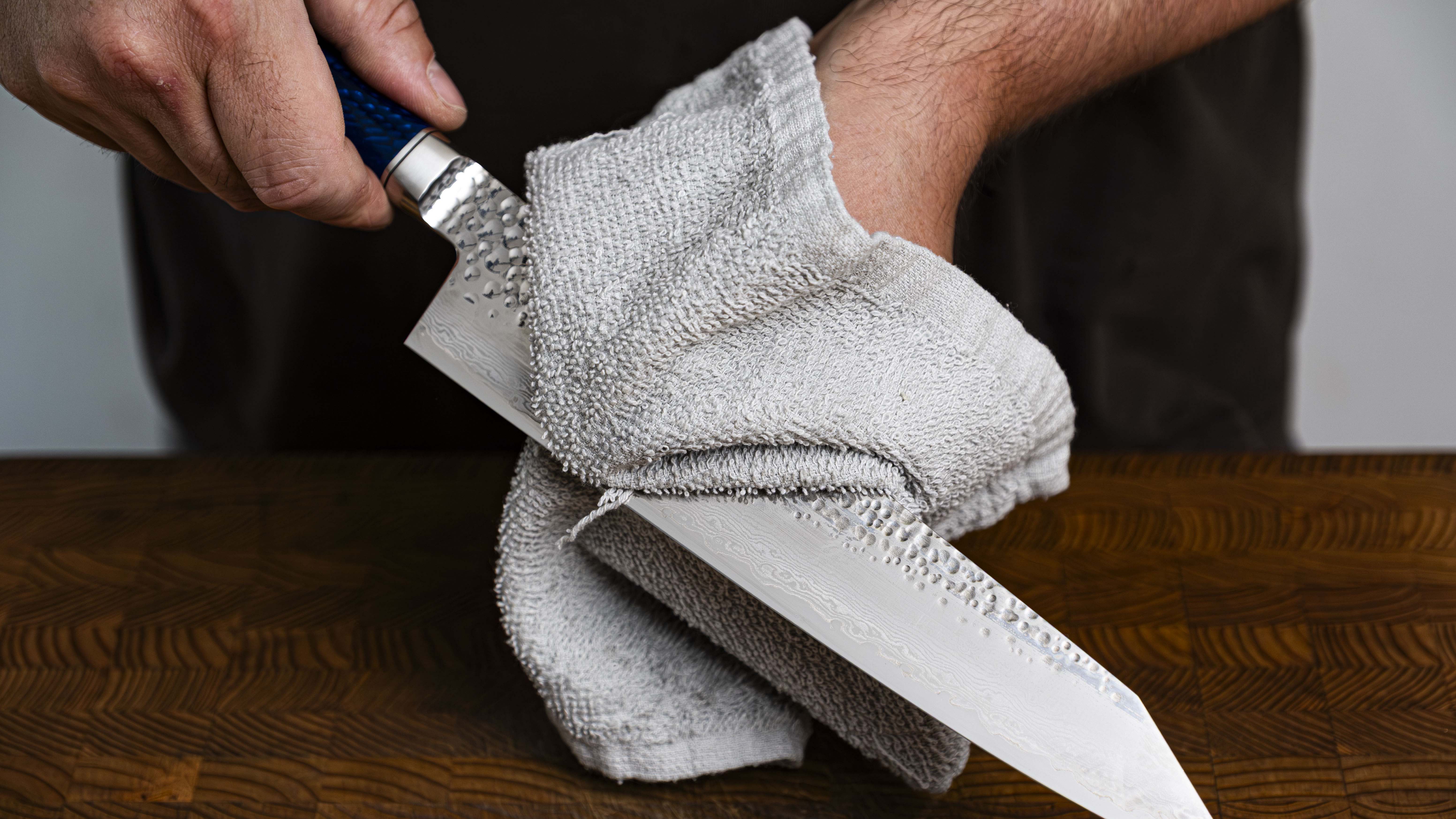
  • Wash and dry by hand using regular dish soap and warm water using a none abrasive sponge or cloth.
  • Ensure the knife is dry before being put away for storage and ensure the edge of the knife is protected to avoid any unnecessary dulling.
  • Avoid Bones, Frozen foods, nuts and hard candies or anything other than fruits, vegetables and proteins.
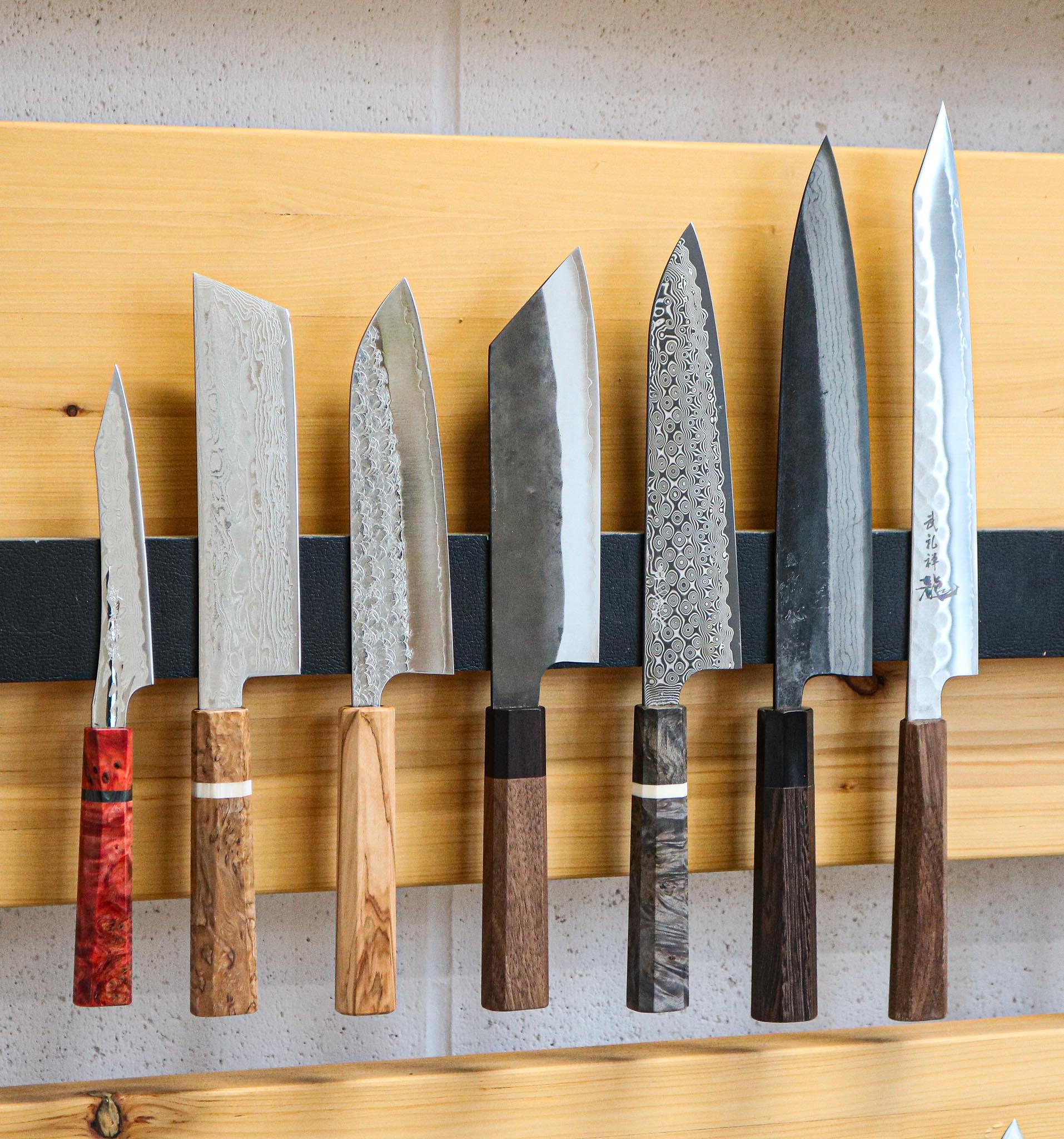
CARE INSTRUCTIONS

Follow these care recommendations for your Japanese knives to protect the edge and keep them sharp as long as possible: 

  • Do not put them in the dishwasher or soak them in water, as this may ruin the wooden handle and rust the blade. 
  • Wash with soapy water and wipe dry after each use, especially after handling acidic ingredients, to minimize the risk of rusting.  
  • Don’t cut through anything you wouldn’t bite through, like frozen foods, hard candies, or bones, as this may chip or damage the knife. 
  • Don't torque the blade, as this may chip the knife. Use it in a forward and back, up and down motion without twisting.
  • Don’t scrape the cutting board with your knife, as this will cause it to dull quickly and ruin your edge. 
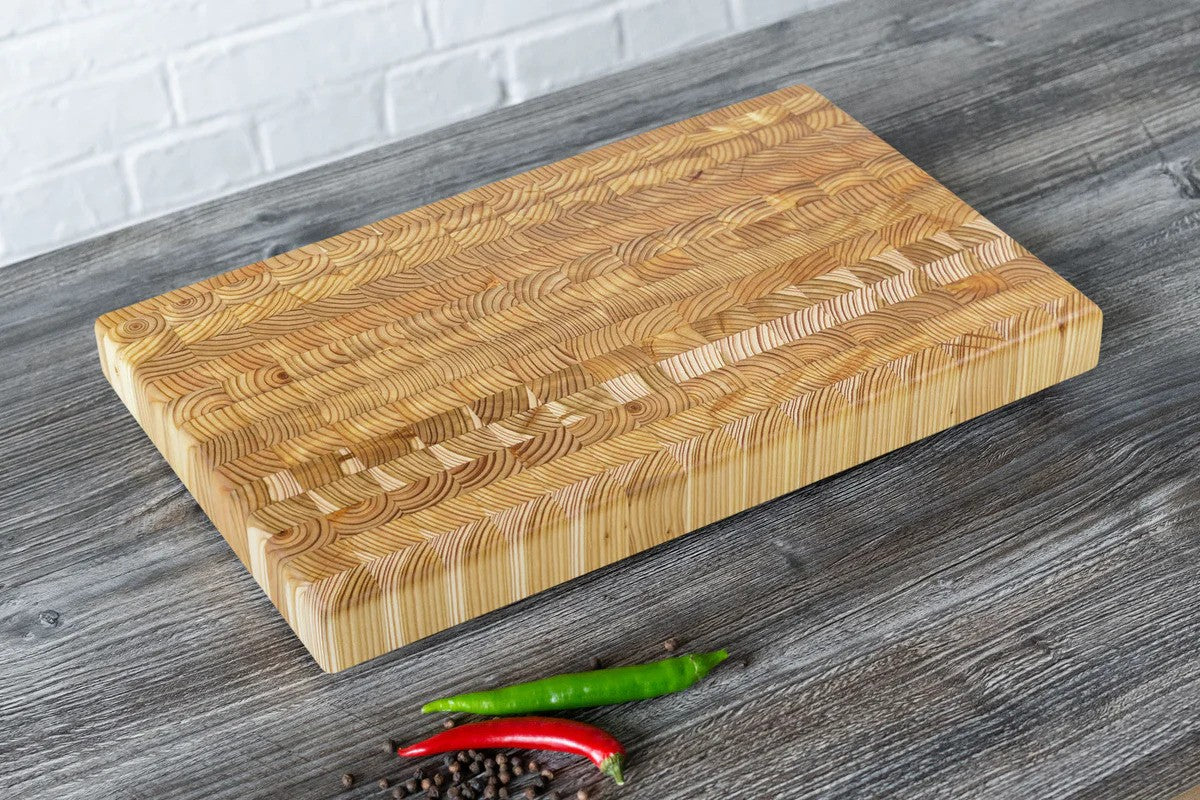
  • Use an end grain wooden cutting board or hi-soft rubberized cutting board if you can to protect your edge. Glass, bamboo, and granite are terrible materials for cutting boards, and plastic is only slightly better. 
SHIPPING & RETURNS

All products are shipped within 24 hours. We offer same day shipping for products ordered by 12pm. Please allow 4-7 business days for your shipment to arrive with standard shipping. Expedited shipping options are also available at checkout.

We offer free shipping on orders within Canada over $150 CAD and free shipping on orders to the US over $200 USD.

Curbside pick-up is available at both our Hamilton and Etobicoke locations.

To make sure our customers are always satisfied, we offer full refunds on products for 14 days after receiving them. See our full return policy for details.

More questions? Check out our shipping policy, our return policy, or reach out to us directly.

KNIFE SHAPE

THE GYUTO

The Gyuto is the Japanese equivalent to the western style chef’s knife and is without question the most versatile knife shape. It ranges in size from 180 mm (7 inches) to 240 mm (10 inches), making it longer than the Santoku and Bunka. This length makes it adept at handling almost any task you'll come across in the kitchen, from mincing small ingredients to chopping through larger fruits and vegetables. The longer the knife, the more time it will take to grow accustomed to its length, but the more versatile it will be.

STEEL TYPE

GINSAN (SILVER #3)

This steel is said to be the most similar to a carbon steel of any stainless steel, because of how easy it is to sharpen. It is technically a semi-stainless steel and is susceptible to rust and discolouration, but must be very poorly treated for any rust to form. It has become a very popular steel type amongst Japanese blacksmiths, home cooks, and professionals alike. It is great for those looking for relatively easy maintenance and easy sharpening.

Chemical Composition:
C 0.95-1.10% | Cr 13.0-14.5%

COMPOSITION

STAINLESS STEEL

LOW MAINTENANCE

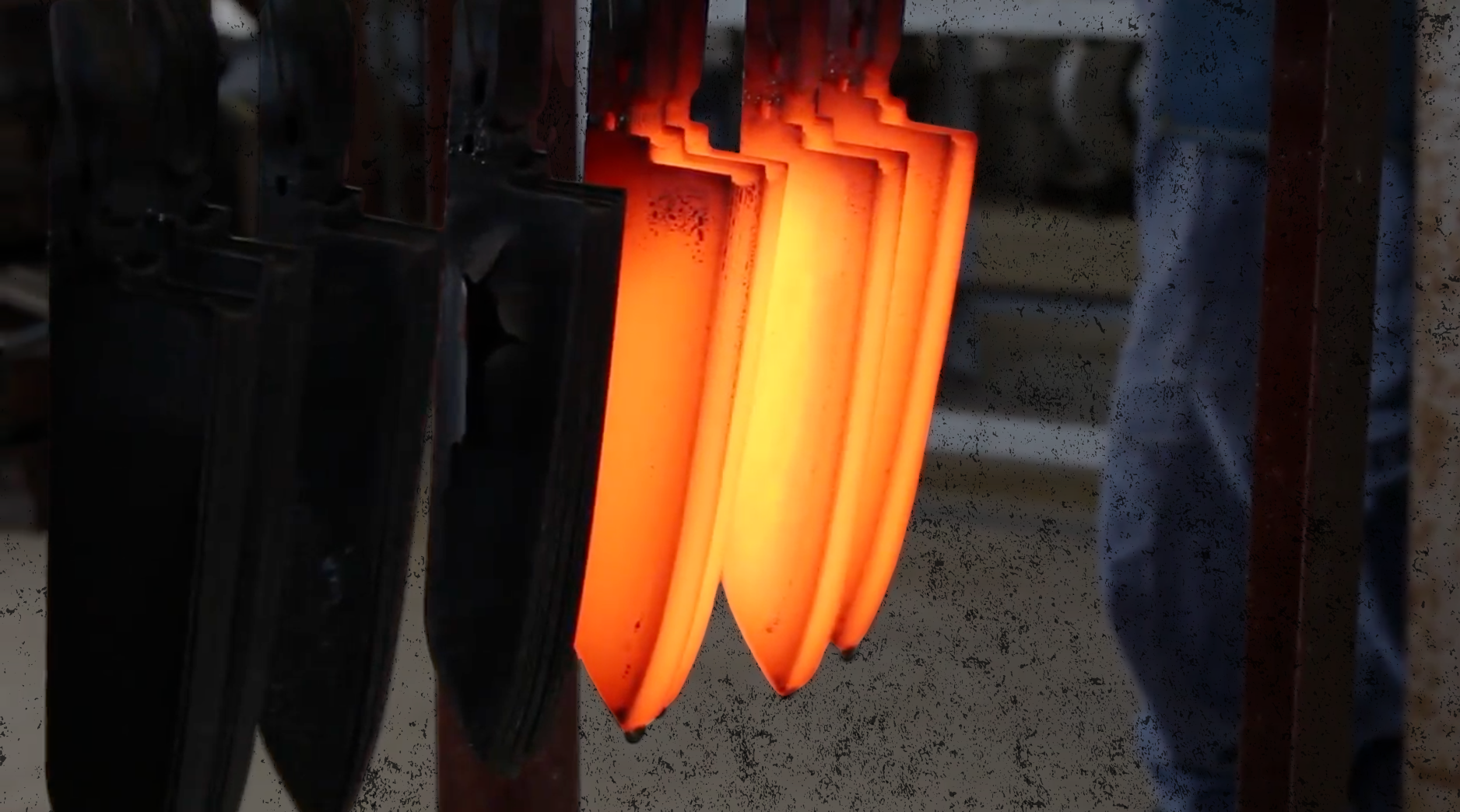
Stainless steel Japanese knives are made in a process called “Sanmai” or “Forge welding” where two softer layers of stainless steel are laminated around a harder core layer of stainless steel. All three of these layers are rust resistant and therefore are not susceptible to rust or discoloration. The softer outer layers of steel are used to make the knife more durable and flexible while the harder core layer is used to provide better edge retention to the blade.

THE BLACKSMITH

RECENTLY VIEWED

RECOMMENDED FOR YOU

REVIEWS