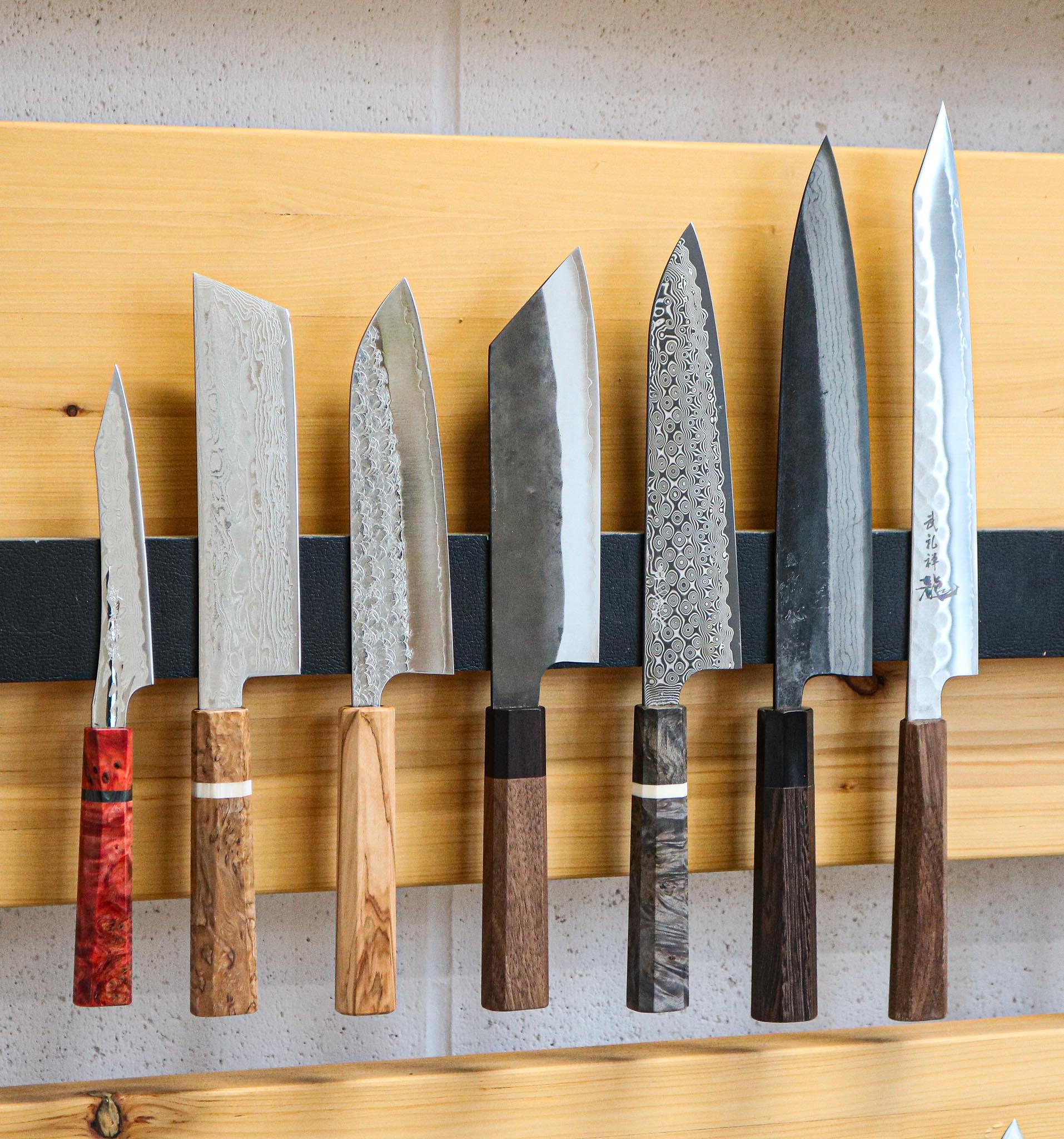
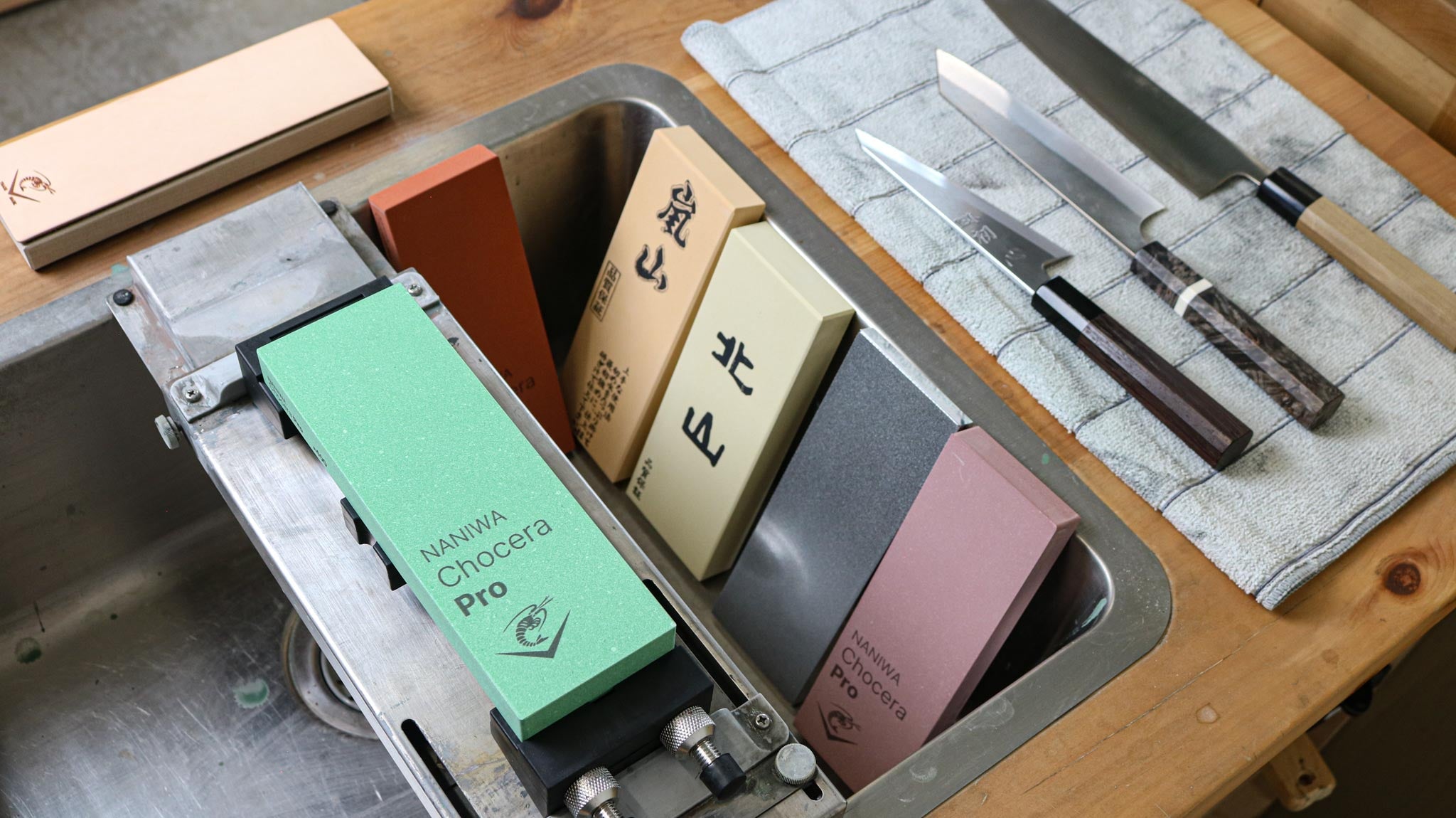
Click the links below for more information on the knives included
Shiro Kamo
Shiro Kamo works in the Famous Takefu knife village in Echizen City, Japan. Knives made in this region are famous for their thinness which is achieved by hammering two blades at once during the forging process. He is a master blacksmith and recently resigned from his post as the Chairman of the Takefu knife Village however he still works as the Chairman of the Echizen Blacksmith Foundation and is working to reinvigorate the blacksmith tradition in Japan.
Takefu Knife Village
The Takefu Knife Village is a cooperative workshop in the Echizen region of Japan. It is the home to a long list of blacksmiths that we work with and many young and upcoming apprentices learning the trade. The area has a 700 year long history of smithing with roots in agricultural tools turned cutlery powerhouse.
The Knife
Petty knives are great for all the little things: Chopping shallots and garlic, mincing herbs and butchering small proteins. They function perfectly as a line knife for our professional chefs out there as they're nimble, don't take up much space but can still accomplish a wide variety of tasks. This also makes them a great option for home cooks looking for something capable they can leave out on the counter all day.
Santoku translates to three virtues. Meat, fish, and vegetables, or slicing, dicing, and chopping. No matter what way you look at it, it implies the versatility of the knife. While you sacrifice some of the slicing capability of a larger gyuto, don't be fooled by its size, the santoku can get 99% of your kitchen tasks done without breaking a sweat, which is probably why its the most popular shape in Japanese home kitchens.
Knife Care (Stainless Clad)
- This knife is made from 3 layers of steel using a technique called Sanmai (Forge welding). It involves laminating a piece of Carbon steel with two pieces of Stainless steel giving the knife all the benefits of the carbon steel (Edge retention, ease of sharpening, cutting feel) and the Ease of Maintenance from Stainless steel. 2-3 millimeters of the carbon steel is exposed at the edge of the knife and is susceptible to rust and discouloration if not properly maintained.
- Simply Wipe the knife with a damp cloth immediately after use to keep it from rusting or discouloring.
- Wash with regular dish soap and warm water using a none abrasive sponge or cloth.
- Never put your knife in the Dishwasher. The extreme heat will ruin the wooden handle.
- Highly acidic ingredients (Onions, Tomatoes, Citrus) Will cause rust and oxidation to happen faster, thus the user must ensure the knife is wiped clean immediately after working with such an ingredient.
- Should any rust form it can be removed using a rust eraser or a mixture of Baking soda and water to simply scrub it clean.
- Avoid Bones, Frozen foods, nuts and hard candies, parmesan rinds, woody stems or anything other than fruits, vegetables and proteins.