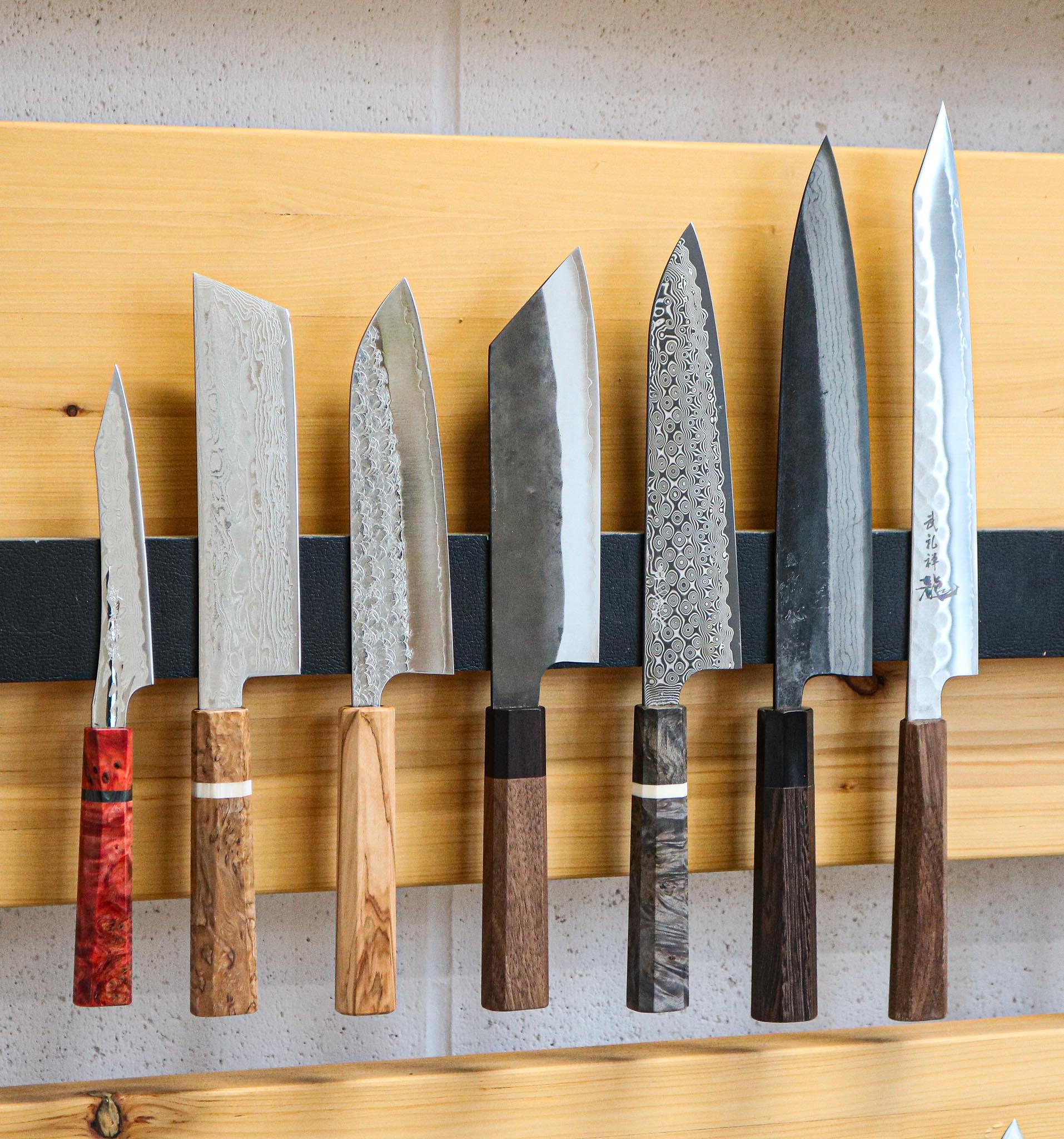
"I want to create amazing and inspirational knives that appeal to the hearts of the users." Well, Fujiwara-san, I think it's safe to say you have done just that!
Fujiwara-san is a pioneer in what we would refer to as the New age of Japanese cutlery production and is credited with expanding the forge welding technique to stainless steels creating what we call now a stainless clad knife. This technique was originally only used to laminate Iron over a harder piece of carbon steel creating an Iron clad knife, this style is still used today and is still very popular but can be difficult to maintain. A stainless clad knife has all the benefits of stainless steel and carbon steel mixed into one awesome package.
The Knife
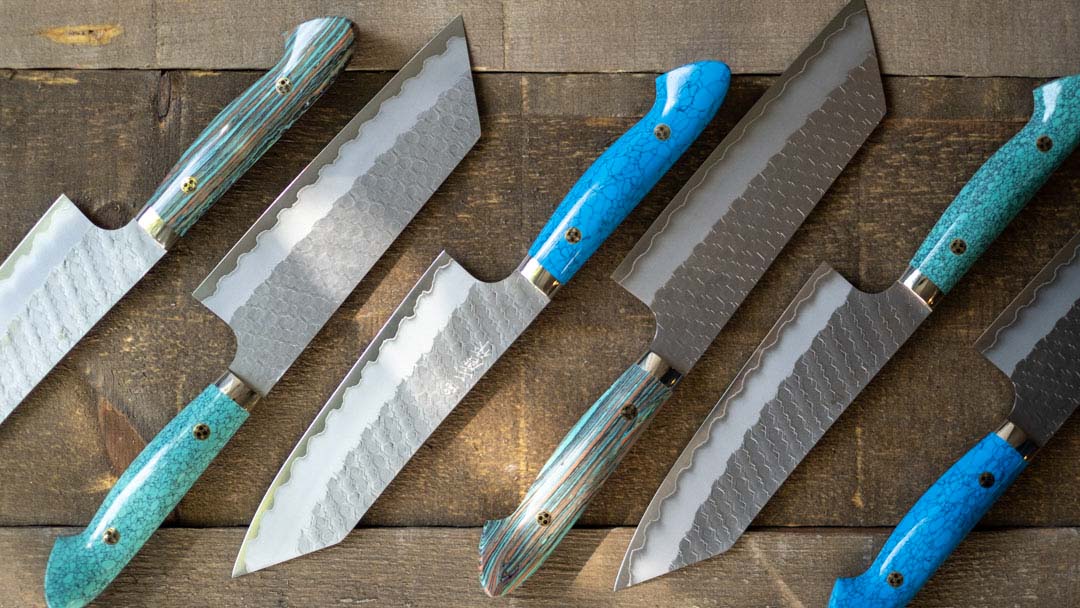
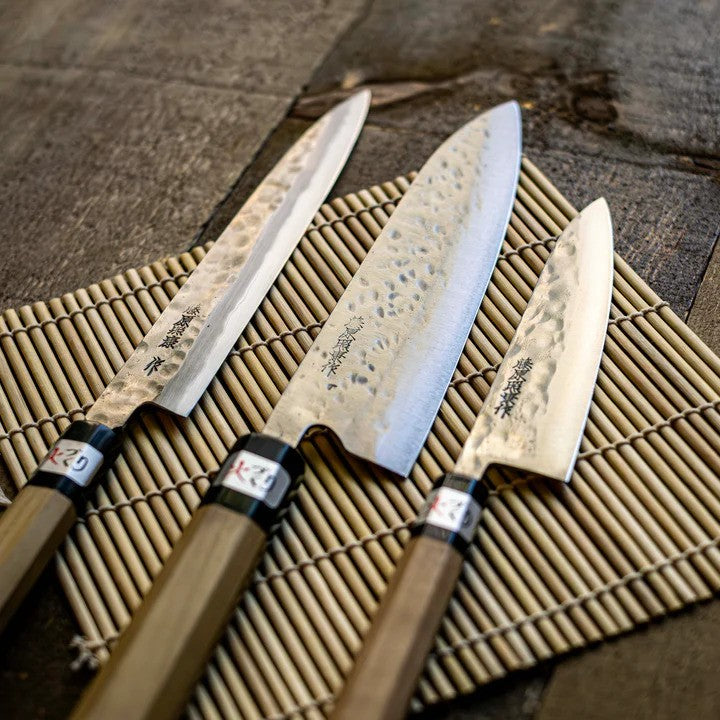
Knives from the Maboroshi series are highly sought after by professional chefs and home cooks alike because of their amazing sharpness, edge retention and cutting feel. They have gorgeous tsuchime finish that give them a mysterious and rustic finish, just begging you to pick it up and cut with it. Another special and unique thing about the Maboroshi series is the notch in the choil which makes this knife beyond comfortable to hold especially when using a pinch grip.
It should be noted that these knives are very thin behind the edge and are more prone to chipping than the average Japanese knife. Please thoroughly read the care instructions below before considering a purchase.
The bunka is to the santoku what the kiritsuke is to the gyuto. With a more aggressive tip and flatter profile than most santokus this bunka will excel at chopping and piercing tasks, and also more detailed tip work. Have that extra length at 180 mm it also walks to line of versatility between the standard sized bunka/santoku and the 210mm gyuto.
Never twist or torque your knife on a cutting board or in an ingredient, this WILL cause your knife to chip. Use your knife in an up and down, forward and backward cutting motion.
This knife is made from 3 layers of steel using a technique called Sanmai (Forge welding). It involves laminating a piece of Carbon steel with two pieces of Stainless steel giving the knife all the benefits of the carbon steel (Edge retention, ease of sharpening, cutting feel) and the Ease of Maintenance from Stainless steel. 2-3 millimeters of the carbon steel is exposed at the edge of the knife and is susceptible to rust and discouloration if not properly maintained.
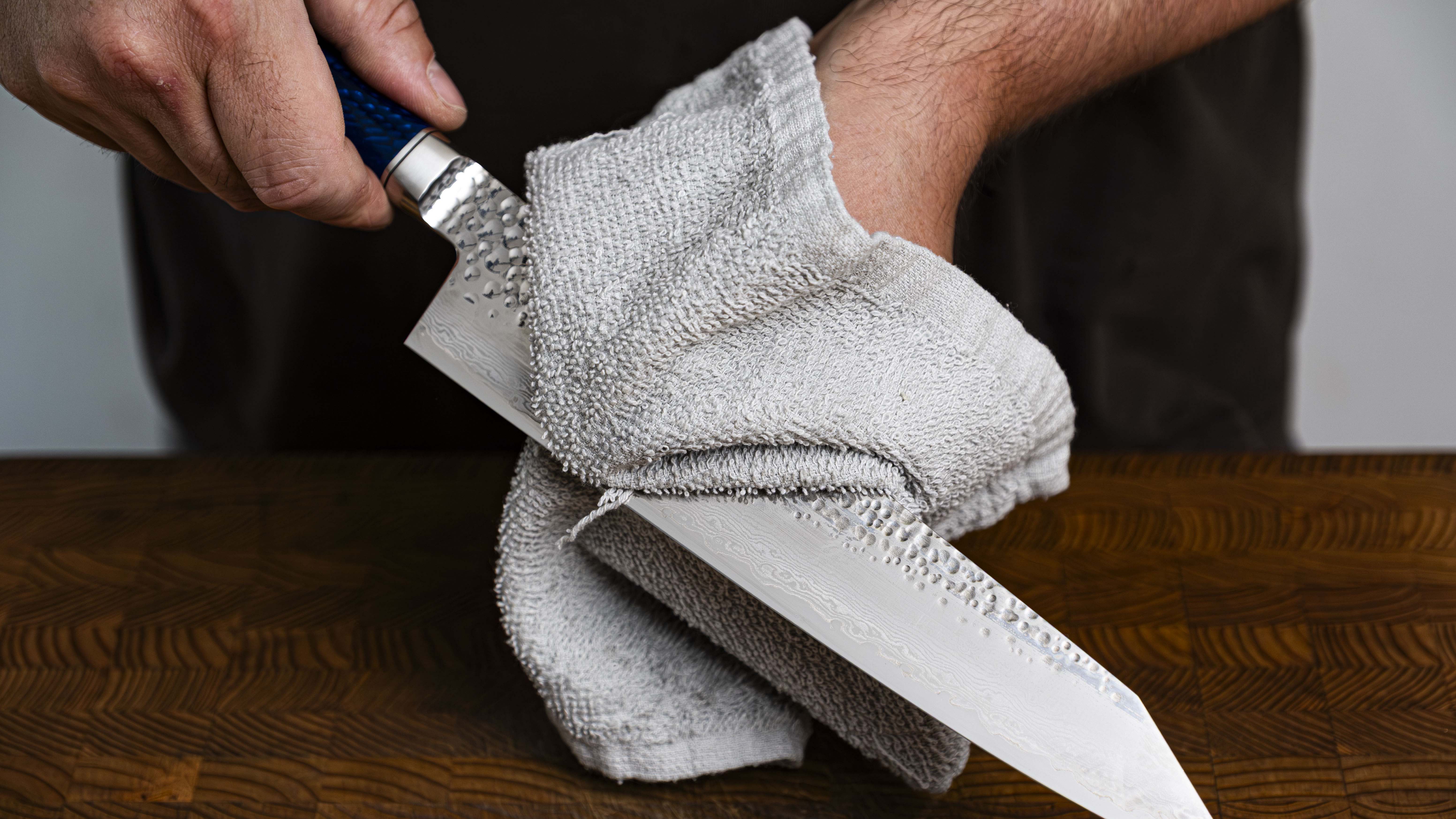
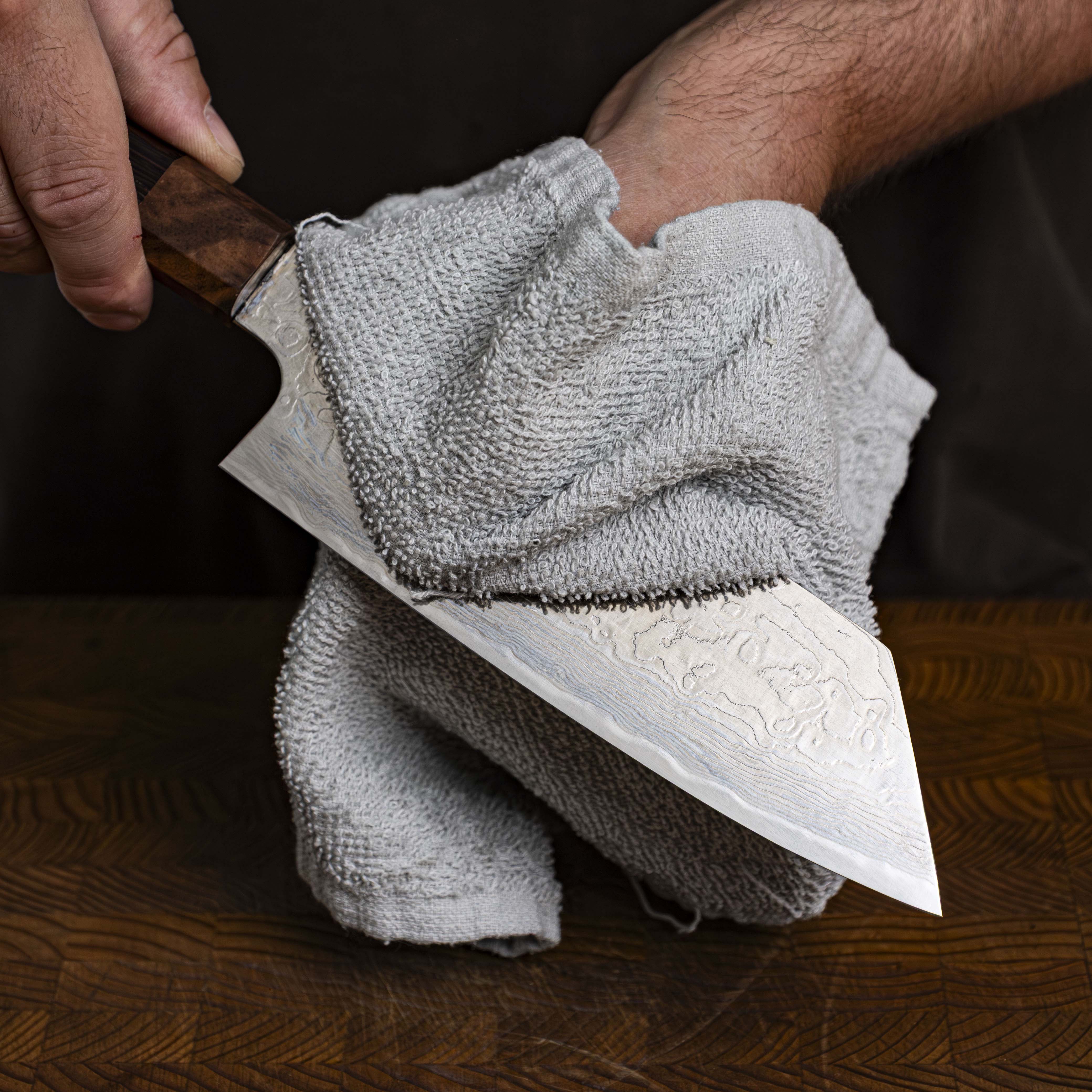
Simply Wipe the knife with a damp cloth immediately after use to keep it from rusting or discouloring.
Wash with regular dish soap and warm water using a none abrasive sponge or cloth.
Never put your knife in the Dishwasher. The extreme heat will ruin the wooden handle.
Highly acidic ingredients (Onions, Tomatoes, Citrus) Will cause rust and oxidation to happen faster, thus the user must ensure the knife is wiped clean immediately after working with such an ingredient.
Should any rust form it can be removed using a rust eraser or a mixture of Baking soda and water to simply scrub it clean.
Avoid Bones, Frozen foods, nuts and hard candies or anything other than fruits, vegetables and proteins.
CARE INSTRUCTIONS
Follow these care recommendations for your Japanese knives to protect the edge and keep them sharp as long as possible:
Do not put them in the dishwasher or soak them in water, as this may ruin the wooden handle and rust the blade.
Wash with soapy water and wipe dry after each use, especially after handling acidic ingredients, to minimize the risk of rusting.
Don’t cut through anything you wouldn’t bite through, like frozen foods, hard candies, or bones, as this may chip or damage the knife.
Don't torque the blade, as this may chip the knife. Use it in a forward and back, up and down motion without twisting.
Don’t scrape the cutting board with your knife, as this will cause it to dull quickly and ruin your edge.
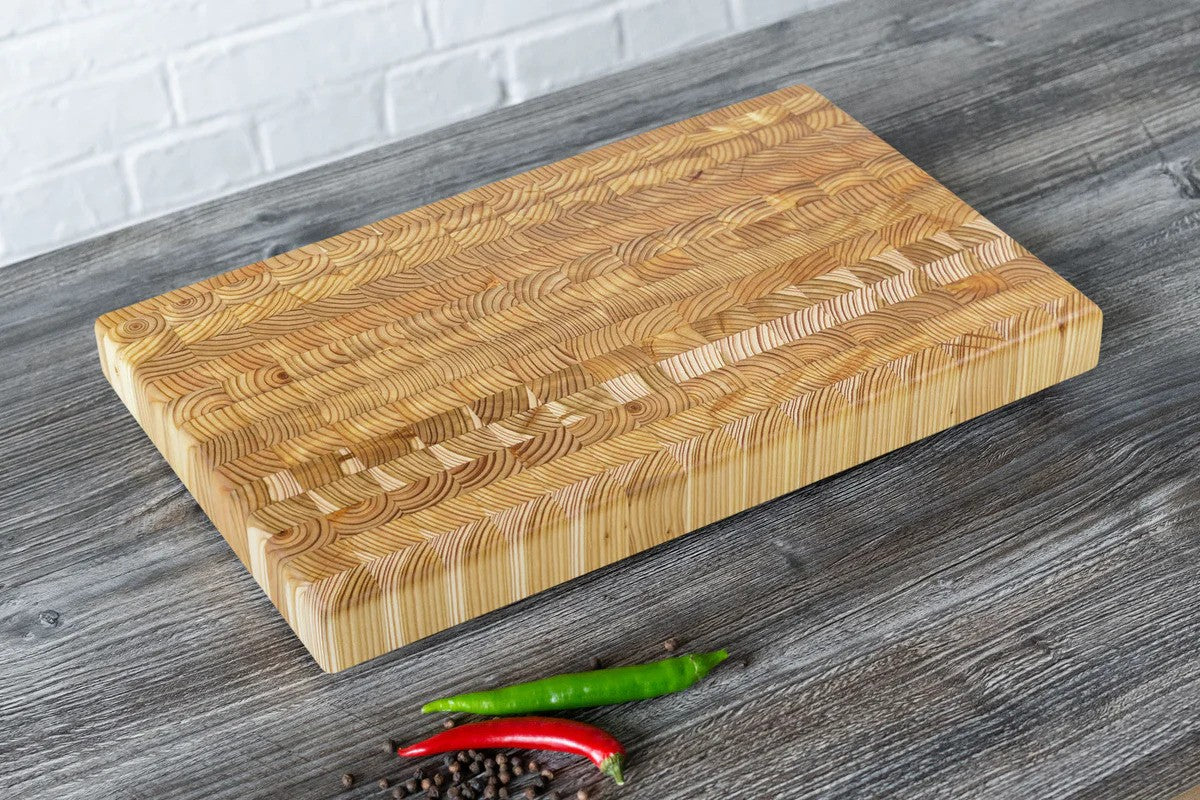
Use an end grain wooden cutting board or hi-soft rubberized cutting board if you can to protect your edge. Glass, bamboo, and granite are terrible materials for cutting boards, and plastic is only slightly better.
SHIPPING & RETURNS
All products are shipped within 24 hours. We offer same day shipping for products ordered by 12pm. Please allow 4-7 business days for your shipment to arrive with standard shipping. Expedited shipping options are also available at checkout.
We offer free shipping on orders within Canada over $150 CAD and free shipping on orders to the US over $200 USD.
Curbside pick-up is available at both our Hamilton and Etobicoke locations.
To make sure our customers are always satisfied, we offer full refunds on products for 14 days after receiving them. See our full return policy for details.
The Bunka is a mid-sized, all-purpose knife that is compact, nimble, and handles many tasks. It's a touch shorter than the Gyuto and Kiritsuke, making it easier to wield and less intimidating to use. The "reverse tanto" or "K-tip" gives the user more travel for their guide finger toward the tip of the knife, which is super handy for tasks that require precise tip work, like brunoise shallot or garlic. It's great at slicing smaller proteins and flying through any mid-sized vegetable.
STEEL TYPE
SHIROGAMI #1
AKA White #1: This steel type is very similar to Shirogami #2 but has added levels of carbon allowing it to achieve a slightly higher rockwell hardness, contributing to better edge retention. This does make the steel a bit more brittle and prone to chipping. It is very easy to sharpen and polish and because of its fine grain structure can achieve a super sharp edge.
Chemical Composition:
C 1.25-1.35%
COMPOSITION
STAINLESS CLAD
MODERATE MAINTENANCE
Stainless clad knives have two softer outer layers of stainless steel around a harder core layer of carbon steel. The clad line (wavy line near the cutting edge of the knife) is where the layers of stainless steel end. Past this point, the exposed carbon steel is susceptible to rust or discoloration. This edge will develop a patina (a darkening of the steel; blue, dark grey, sometimes black colouration of the blade) no matter how well they are cared for. Stainless clad knives are great for those who want the easy sharpening of a carbon steel coupled with the rust resistant properties of stainless steel.
THE BLACKSMITH
TERUYASU FUJIWARA
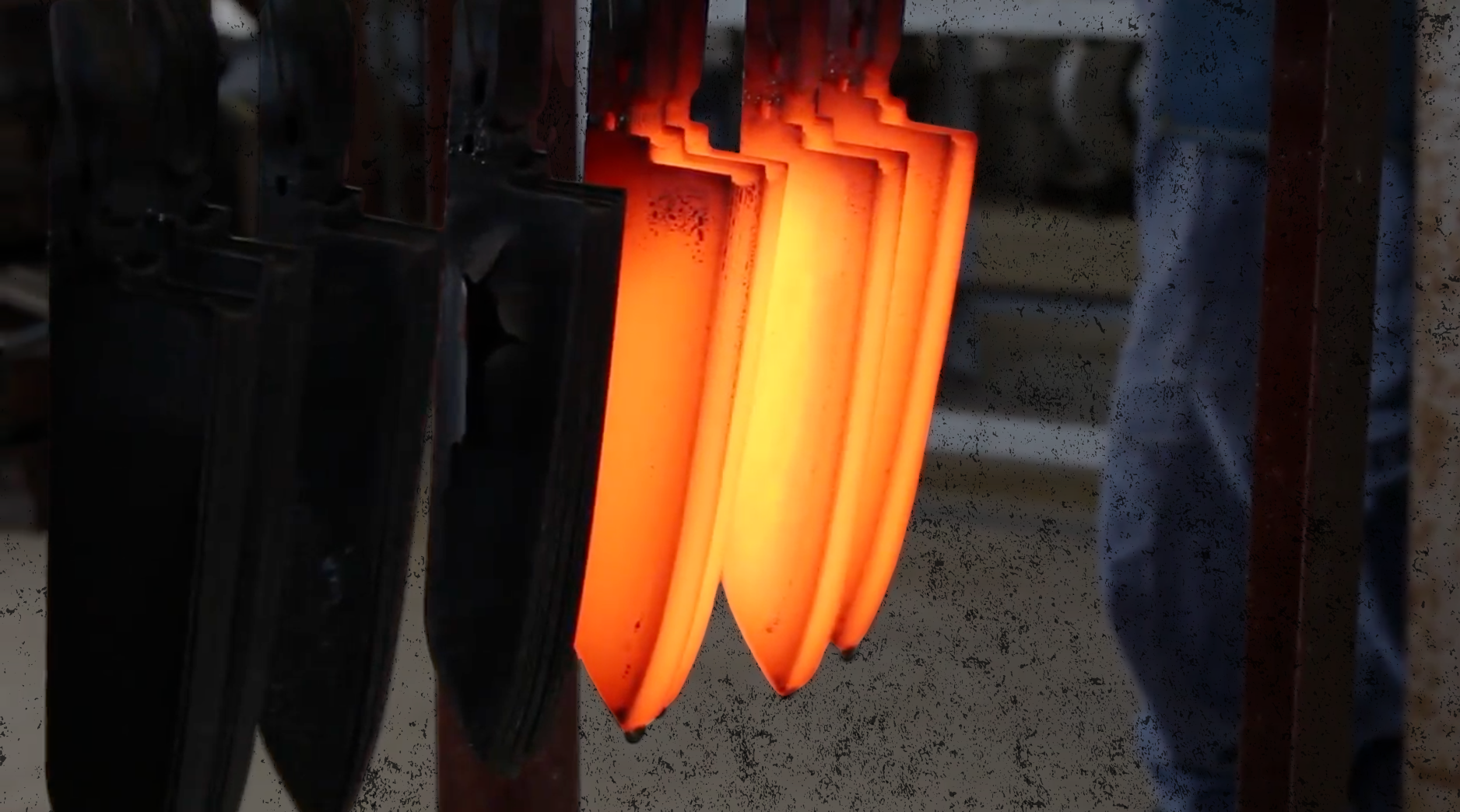
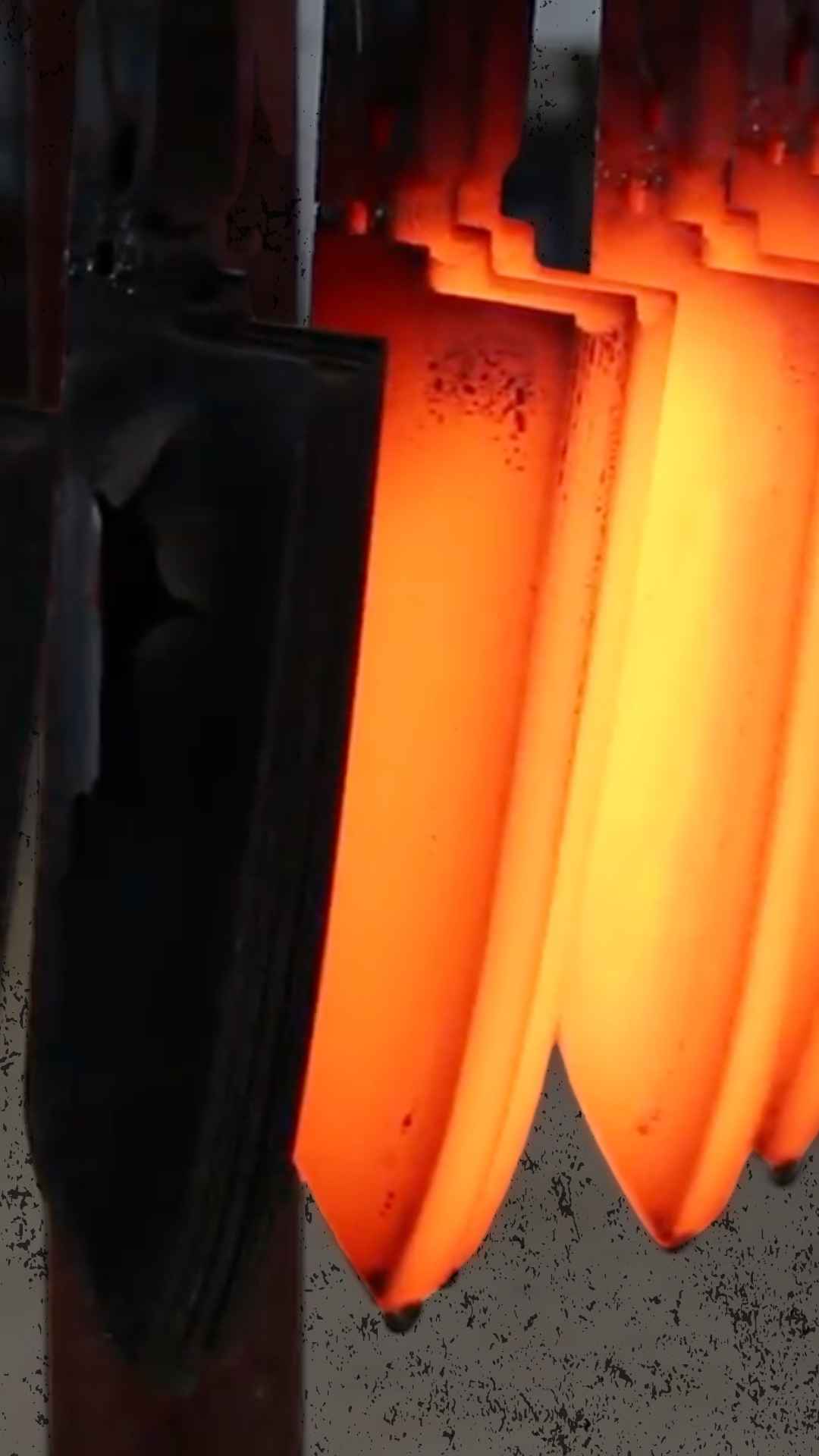
Fujiwara-san is a pioneer in the new age of Japanese cutlery production. He is credited with expanding the forge welding technique to stainless steels, creating what we now call stainless clad knives. This innovation produced an incredibly popular type of knife, with all the benefits of stainless steel and carbon steel mixed into one easy-to-maintain package. With a history starting with sword-making and spanning over 150 years, the Fujiwara family transitioned to kitchen knife making post-World War II, and are known for their legendary heat treatment. "I want to create amazing and inspirational knives that appeal to the hearts of the users."